Japandi style for Indian homes sounds, at first, like a contradiction. The look — that quiet meeting of Japanese restraint and Scandinavian warmth — was shaped in houses with pale floors, low furniture and winters that demand softness. Most of us live in something else entirely: a 2BHK with builder-beige walls, a dark sheesham sofa set inherited or bought in a hurry, and an open-plan living-dining space where everything happens at once. And yet Japandi may be the single most forgiving style you can bring into such a home, precisely because it asks you to remove before you add.
What Japandi actually is
Strip away the Pinterest gloss and Japandi rests on three ideas. First, less, but better — fewer objects, each chosen with care. Second, natural materials in their honest state: wood, linen, cotton, wool, stone, unpolished and unpretending. Third, a muted palette that lets light and shadow do the decorating.
It is not the same as minimalism. A Japandi room is warm. It has texture, imperfection, the mark of a hand. A handloom throw with a slightly irregular weave belongs here in a way a machine-perfect one never quite does.
Why it suits the Indian apartment
Here is the quiet advantage: the raw material of most Indian homes is already half Japandi.
Dark wood furniture. Sheesham and teak read as heavy in maximalist rooms, but against pale walls and pale textiles they become exactly the grounding element Japandi calls for. The Japanese side of the equation has always loved deep, dark timber.
Beige walls. The builder's default off-white is, conveniently, the Japandi base coat. You do not need to repaint.
Strong daylight. Japandi rooms are designed around light. Mumbai, Pune or Bengaluru apartments with a single good window have more to work with than most Copenhagen flats.
The work, then, is not transformation. It is editing.
The three-colour rule
Choose three colours and hold the line. A reliable Indian-apartment palette:
Role · Colour · Where it lives Base · Warm off-white or oatmeal · Walls, curtains, bedding Ground · Deep brown or charcoal · Furniture, a 6×9 ft rug border Accent · Sage, clay or indigo · Two cushions, one throw
Everything you bring in should answer to one of these three. The moment a fourth colour arrives — the printed cushion from a sale, the bright plastic storage box left in the open — the calm collapses. Japandi is less a shopping list than a discipline.
Textiles do the heavy lifting
In a rented flat where you cannot change floors or walls, textiles are the whole game.
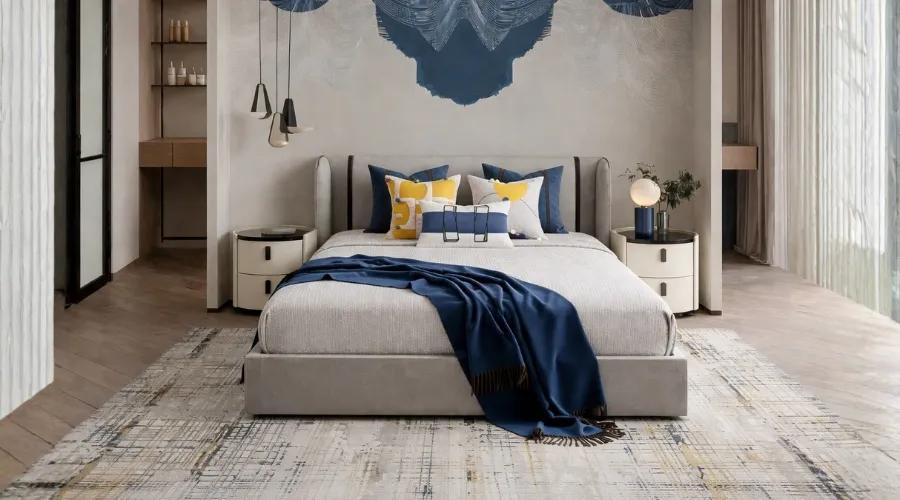
Cushions: keep to four on a three-seater sofa. Two 20-inch covers in your base colour at the corners, two 18-inch in your accent inside them. Linen and textured cotton over shiny synthetics, always.
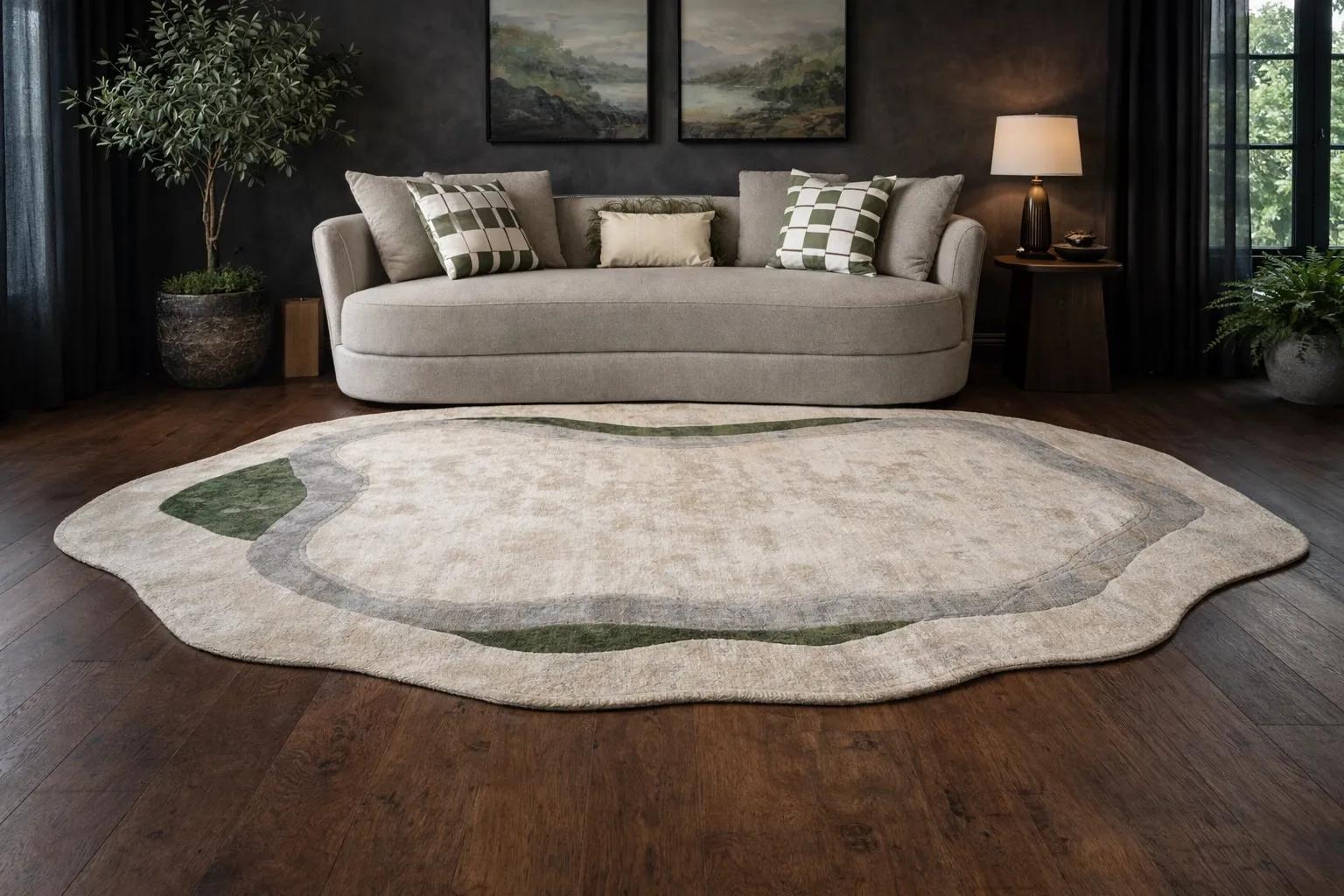
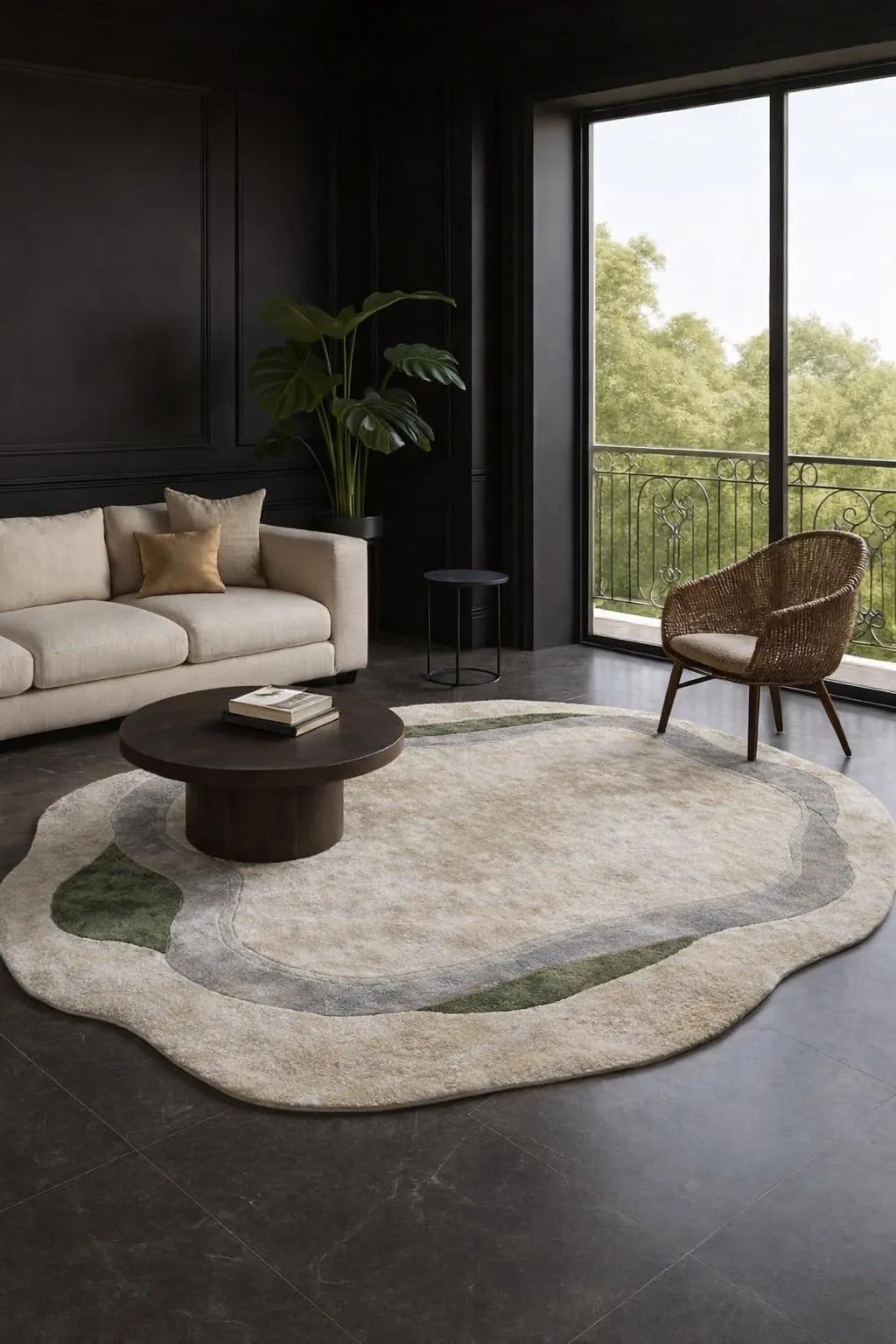
A rug to define the zone: in an open-plan living-dining room, a 6×9 ft flatweave under the seating — front legs of the sofa on the rug — draws the boundary that walls do not. Natural jute-and-wool blends and quiet flatweave textures sit comfortably in this register.
One throw, folded once: draped in thirds over the sofa arm, not artfully tossed. Restraint extends to styling.
Bedding: a single tonal set, no contrast runner, no decorative pillow mountain. Two sleeping pillows, two 24-inch euro shams, done.
This is roughly the philosophy SOISU builds around — Italian, Scandinavian and Japandi design directions, curated in honest materials for Indian homes, so the quiet texture Japandi depends on arrives without the import mark-up of a container ship.
What to remove before you buy anything
Japandi begins with subtraction. A weekend's worth:
Clear every horizontal surface, then return only what you use daily or genuinely love. Aim for three objects per surface, at most.
Take down heavy pelmets and double curtains; a single linen or cotton panel in your base colour lets the light in.
Retire any textile with a loud print or a shine. Store it; you need not be ruthless, only honest.
Hide wires, chargers and remotes in one closed basket. Visual silence is mostly cable management.
The room is finished not when there is nothing left to add, but when removing one more thing would make it worse.
The takeaway
Japandi in a 2BHK is four moves: keep your dark wood and let it anchor the room; commit to three colours and refuse the fourth; spend on natural-fibre textiles — four cushions, one 6×9 ft rug, one throw — rather than new furniture; and remove more than you add. The style was never about owning Japanese or Scandinavian things. It is about giving an ordinary room enough quiet to be noticed — something an Indian apartment, with its good light and honest wood, is unusually well placed to do.