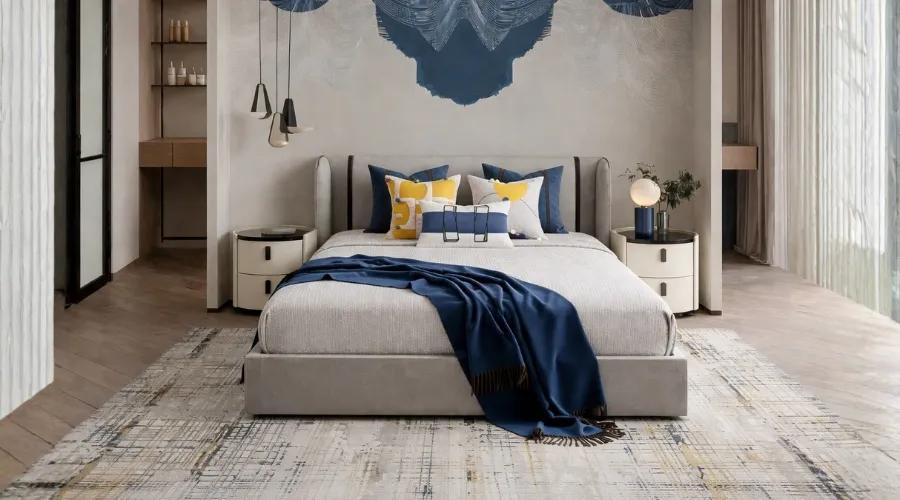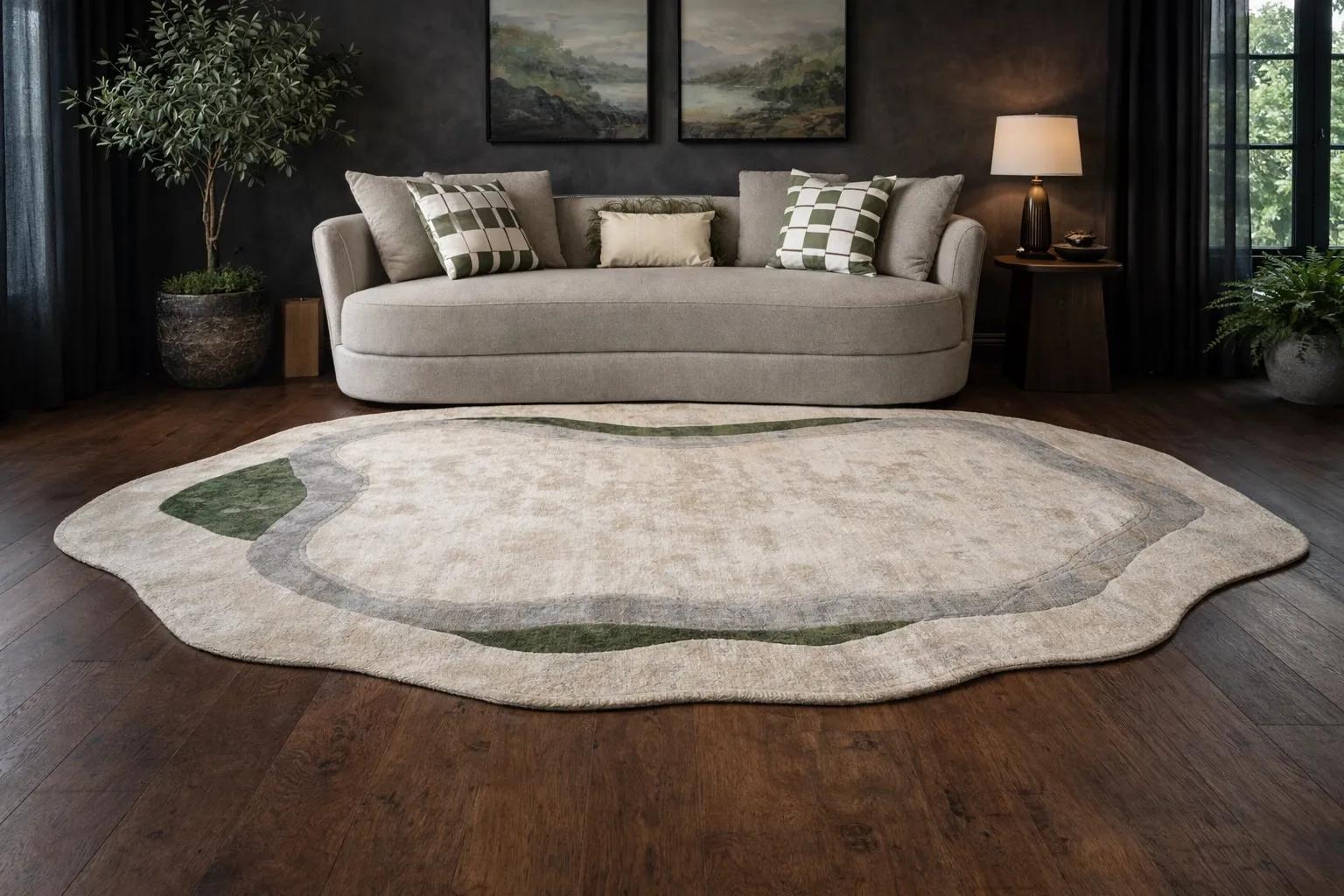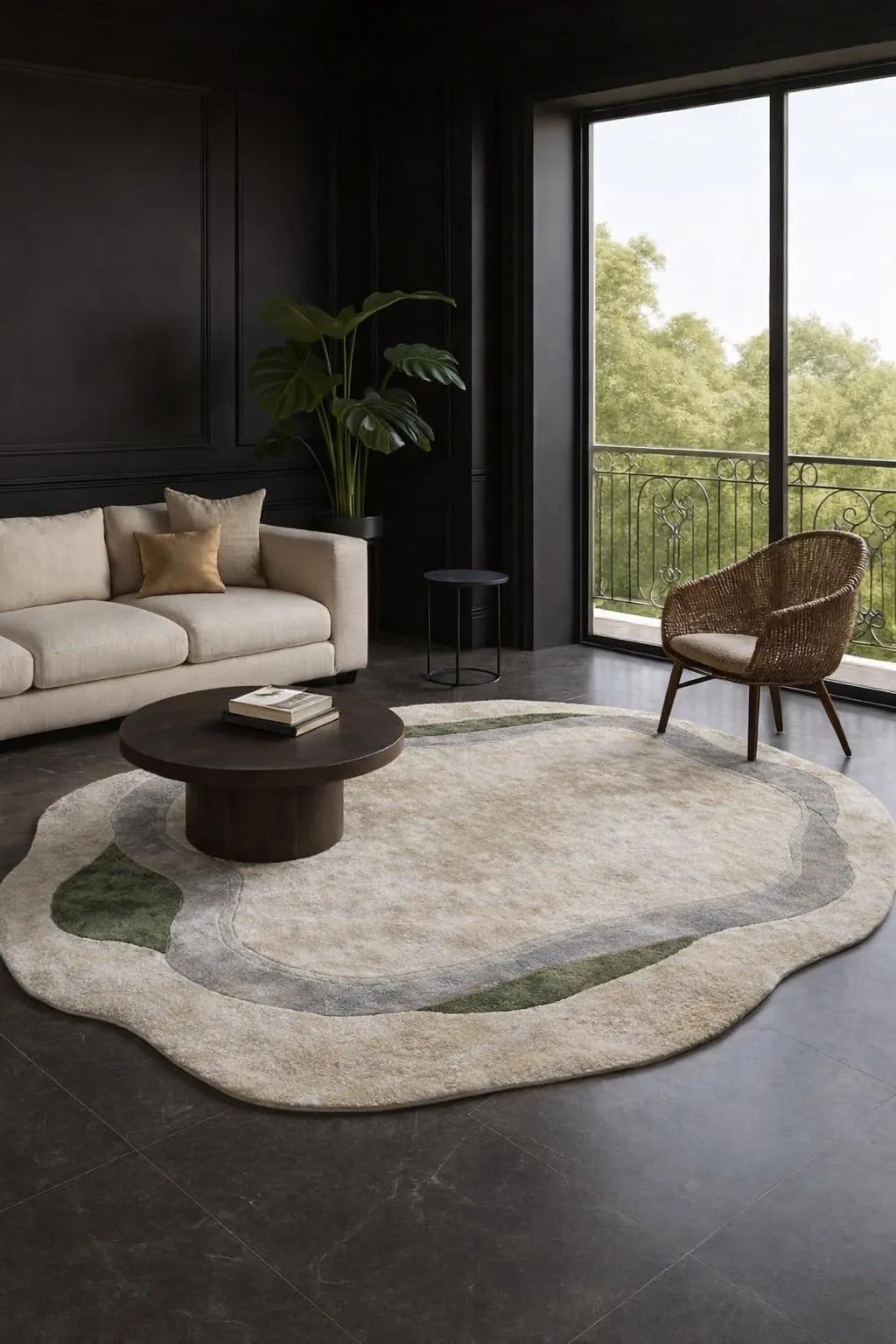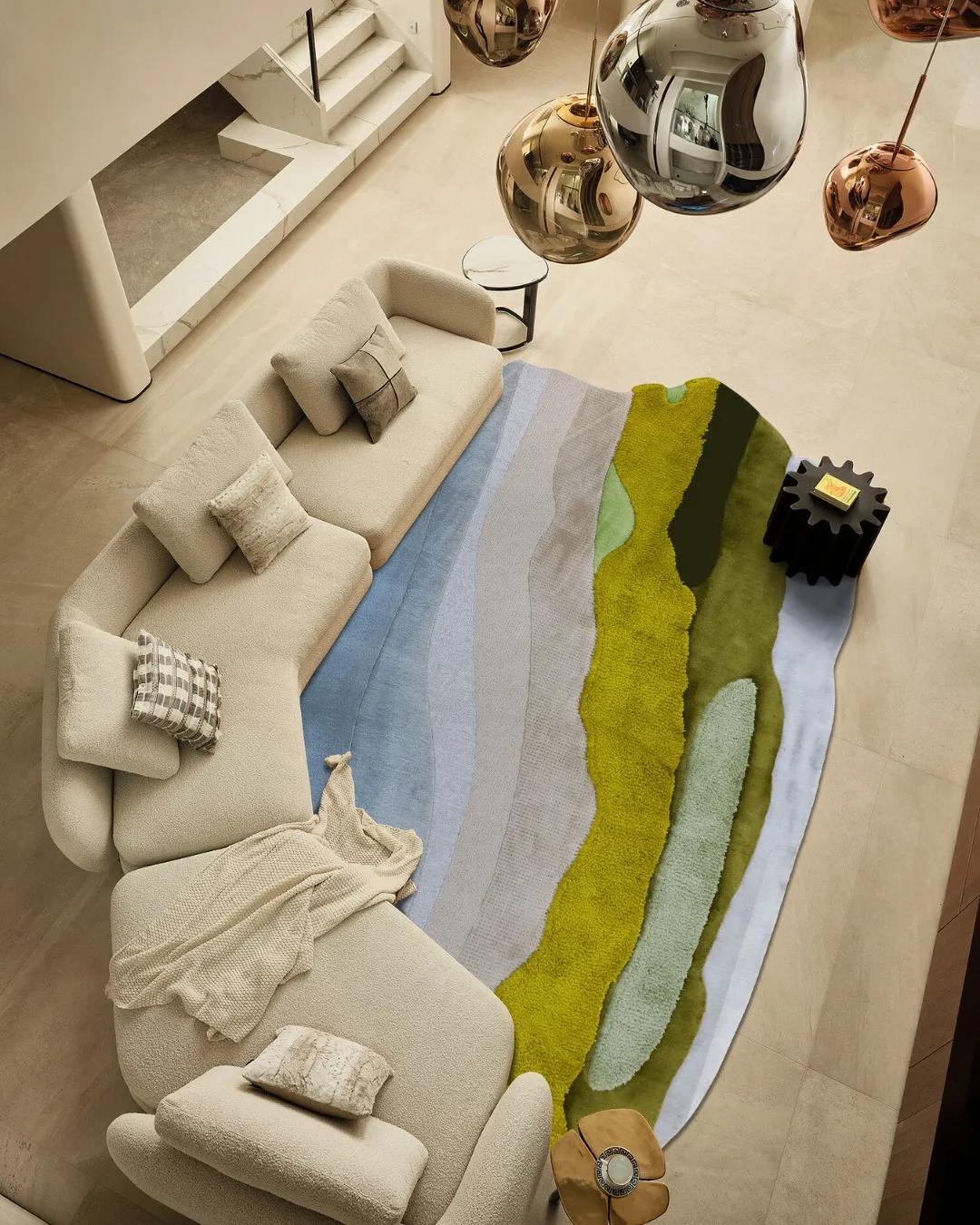
A Mumbai living room is a specific design problem: usually compact, often open to the dining area, finished in builder-beige, exposed to humidity and salt air, and asked to do the work of three rooms at once. The good news is that the things which make these rooms feel premium are almost entirely soft and movable — rugs, cushions, throws, light and layout — so you can transform one without touching a wall, a tile or a contractor. Here is how.
Start with the rug — and size it up
The single most common mistake in compact flats is a rug that is too small, floating like a postage stamp in the middle of the floor. A correctly-sized rug does the opposite of what people fear: it makes a small room look larger and more intentional, because it defines the seating zone as one composed area.
In a typical Mumbai living room, the rug should sit under at least the front legs of the sofa and span most of the seating group.
A 5 × 8 ft rug suits a compact 1-2BHK layout; 6 × 9 ft works for a standard 3-seater with chairs.
Choose low pile — it resists humidity and dust, is easier to keep clean, and reads more contemporary than a deep shag in a small space.
Use cushions to set the register
Cushions are the cheapest way to move a room from builder-finish to designed. On a standard 3-seater, a row of 45 × 45 cm square covers with a 30 × 50 cm lumbar reads balanced. Keep the scheme disciplined:
One print, one texture, one solid — in a single restrained palette.
Echo one colour already in the room (a curtain, an artwork) so the cushions tie the space together rather than competing with it.
In a small flat, fewer and better beats many and busy. Three considered cushions outperform six bargain ones.
Layer a throw for warmth and finish
A throw cast loosely over one arm of the sofa adds the textural warmth that compact, AC-cooled rooms tend to lack, and it finishes the seating like a tailored detail. Undyed wool-blend throws in natural tones give warmth without bulk and work year-round; cotton throws are lighter and fully washable. Drape, don't fold-and-centre — the relaxed cast is what reads expensive.
Work with the open plan, not against it
Most Mumbai flats run the living and dining together. Rather than fighting it, zone with textiles: the rug anchors the living side, a runner or a pair of placemats defines the dining side, and a repeated accent colour across both makes the whole open space feel like one considered scheme rather than two rooms colliding. Keep furniture low and against the walls to preserve the sense of floor — visible floor is what makes a small room breathe.
Respect the climate
Humidity and salt air are the quiet enemies of soft furnishings near the coast. A few habits keep things looking new:
Favour low-pile rugs and breathable natural fibres (cotton, linen, wool-blend) that handle moisture better than synthetics.
Air rugs and throws periodically, especially through the monsoon, to prevent damp.
Line-dry washable covers; strong Mumbai sun keeps colour fast and freshens fabric.
The order to do it in
If you are starting from a bare builder flat, this sequence gives the fastest visible lift:
Rug — correctly sized, low pile. It anchors everything.
Cushions — one disciplined palette across the sofa.
Throw — one good piece for warmth and finish.
Edit — clear a third of the surface clutter so the new layers can breathe.
None of this requires renovation, and all of it is movable when you do. SOISU is a Mumbai studio built precisely for this: world design curated in honest materials, sized for the Indian sofa and the compact apartment, shipped from our Prabhadevi warehouse with transparent PIN-code delivery — and you can walk into the Experience Centre and feel the difference between a cushion that lasts and one that doesn't before you buy.