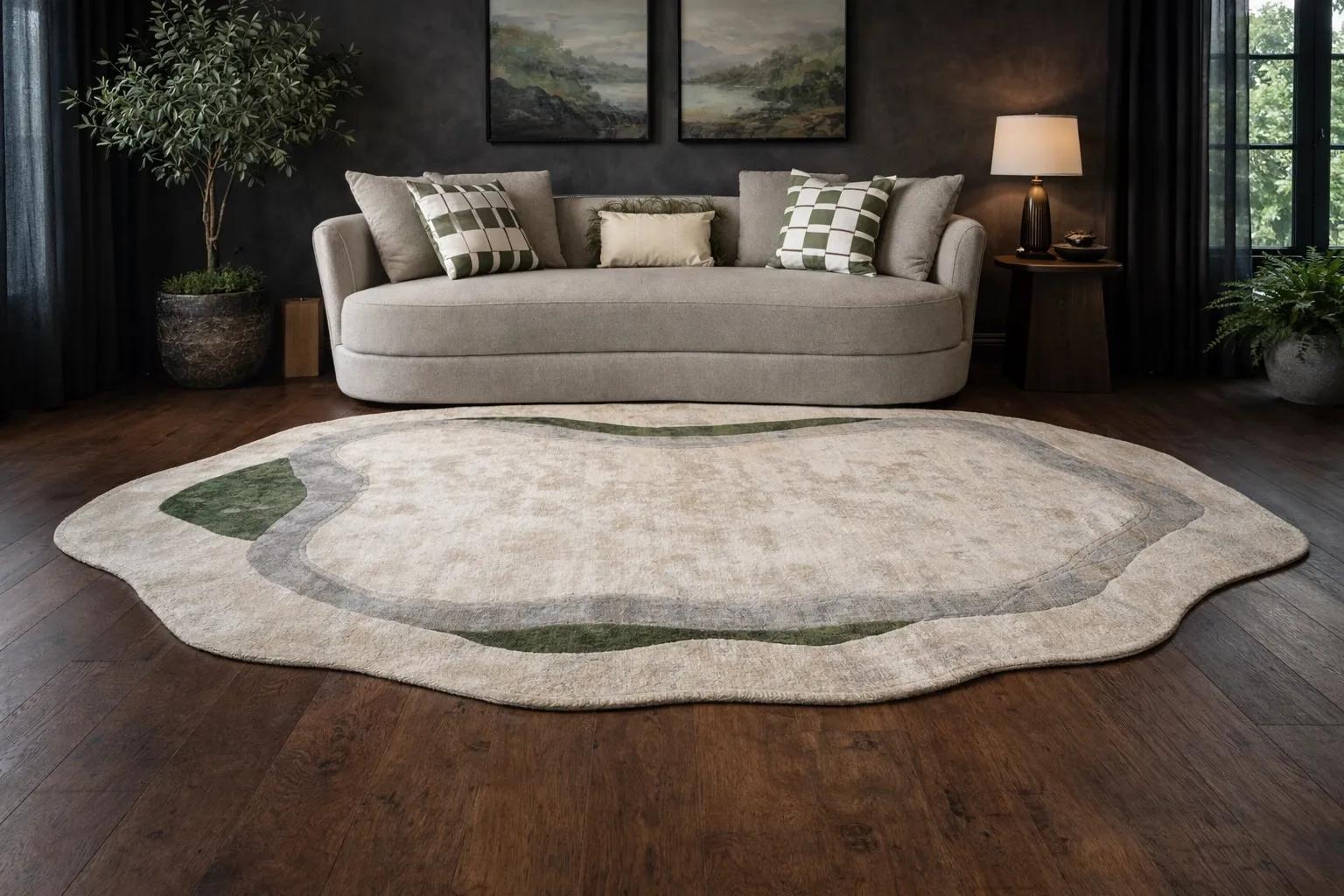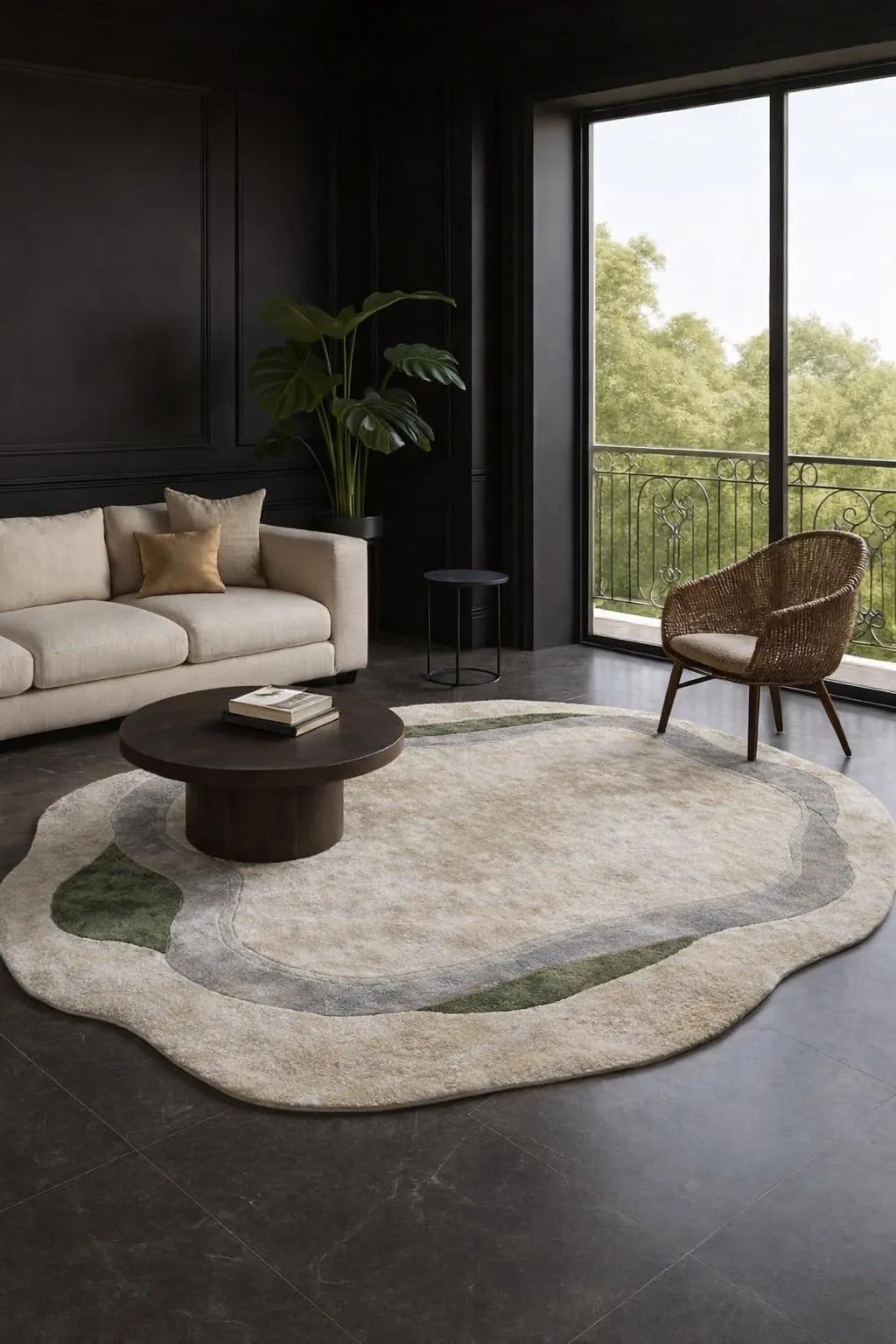
Somewhere between the bed and the sofa lives a category of textile that Indian homes have always owned but rarely named precisely. The throw vs blanket vs shawl distinction sounds like splitting hairs until you try to buy one — and discover that a throw draped on a sofa, a blanket folded in the cupboard and a shawl across the shoulders are three different objects with different sizes, weaves and prices. Knowing which is which saves money and, more quietly, makes a living room look finished.
What separates the three
The honest answer is size, placement and intent.
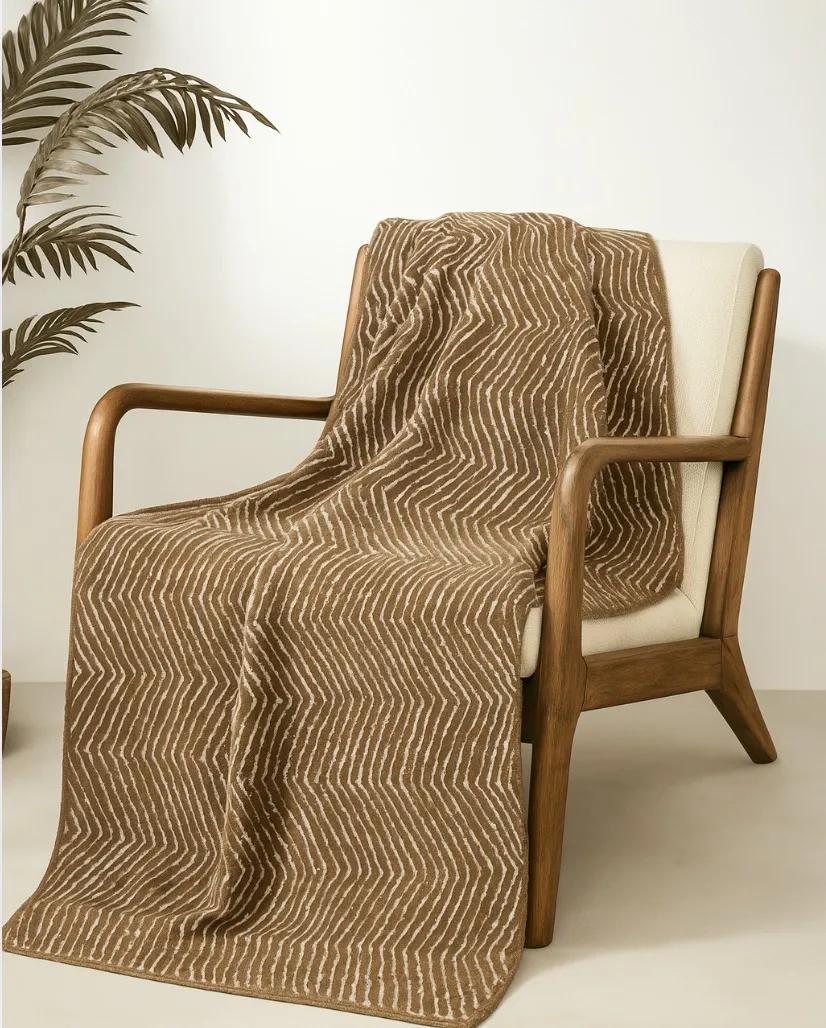
A throw is the smallest — typically around 130 by 170 centimetres. It lives in plain sight: draped over a sofa arm, folded across the foot of a bed, pooled in a reading chair. It is part decoration, part single-person warmth, and it is the only one of the three designed to be looked at all day.
A blanket is bed-sized — single, double, queen or king, anywhere from 150 by 220 centimetres upwards. It lives under or over the top sheet, exists purely for warmth, and spends its off-season folded away. Function first, appearance second.
A shawl is worn, not spread. At roughly 100 by 200 centimetres, it is woven to drape over shoulders, which is why fine shawls use lighter, softer yarns and finer finishing than either of the others. India's great shawl traditions — Kullu's bordered wool weaves, Ludhiana's lambswool, Kutch's hand-woven panels — are garments with centuries of refinement behind them.
The borders blur, of course. A generous Kutch shawl moonlights happily as a sofa throw, and that ambiguity is worth exploiting when you shop.
Fabric, weighed against the Indian calendar
The right fibre matters more here than in almost any other home textile, because India's need for warmth is brief and specific.
Cotton suits most of the year. A handloom cotton throw adds texture to a sofa in June without adding heat, and survives frequent machine washing.
Cotton-wool and lambswool blends are the sweet spot for Indian winters — warm enough for a Delhi December evening or a 22-degree air-conditioned room, light enough not to feel absurd in Mumbai.
Pure wool and merino earn their keep in north India and the hills; elsewhere they spend ten months folded away.
Chenille and bouclé-textured throws offer softness and visual depth with moderate warmth — well matched to AC living rooms.
A note for monsoon months: anything wool-rich should be aired in sunlight before storage and kept with a desiccant or neem leaves, because humidity plus a closed cupboard is how moths and mustiness win.
Styling a throw without overthinking it
A throw is the cheapest correction available for a living room that feels stiff. Three placements cover nearly every situation.
The one-arm drape. Fold the throw in half lengthwise and lay it loosely over one arm of the sofa, letting the fringe hang. Deliberately imperfect beats neatly squared.
The diagonal on the bed. Across the foot of a bed at a slight angle, a throw breaks the horizontal lines of sheet and duvet and adds a third texture.
The chair pool. Over the back of an accent chair with one corner falling onto the seat — the gesture that makes a corner look read-in rather than staged.
Colour logic for Indian rooms is straightforward: against dark sheesham or teak furniture and the warm-white walls most apartments have, ivory, oatmeal, rust, ochre and deep olive all work; cool greys often go flat. SOISU's throws — soft cotton, faux fur and wool blends, curated in palettes drawn from Scandinavian and Japandi interiors — sit more comfortably with Indian wood tones than most people expect.
What quality costs, and where to check
Prices in India run roughly like this: honest cotton throws from about ₹1,500–3,000; good cotton-wool and chenille from ₹3,000–6,000; fine lambswool and merino upwards of ₹6,000. Bed blankets track size more than craft; shawls run the full range from ₹2,000 to the stratosphere of pashmina.
Before paying, check four things: the fringe (knotted or back-stitched fringes survive washing; loose cut ends unravel), the selvedge edges (they should be firm and straight), the hand (scrunch a corner — it should spring back, not stay crushed), and the label's fibre honesty (the word "wool blend" with no percentage usually means mostly acrylic).
The short version
Buy by placement, not by name. For the sofa, a 130 by 170 centimetre throw in cotton for most of the year or cotton-wool for winter. For the bed, a properly sized blanket chosen for warmth alone. For the shoulders, a shawl — and if you find a handsome one, let it live on the sofa between wears. One good throw in a colour that flatters your wood furniture does more for a living room than a second cushion ever will, and it costs about the same.