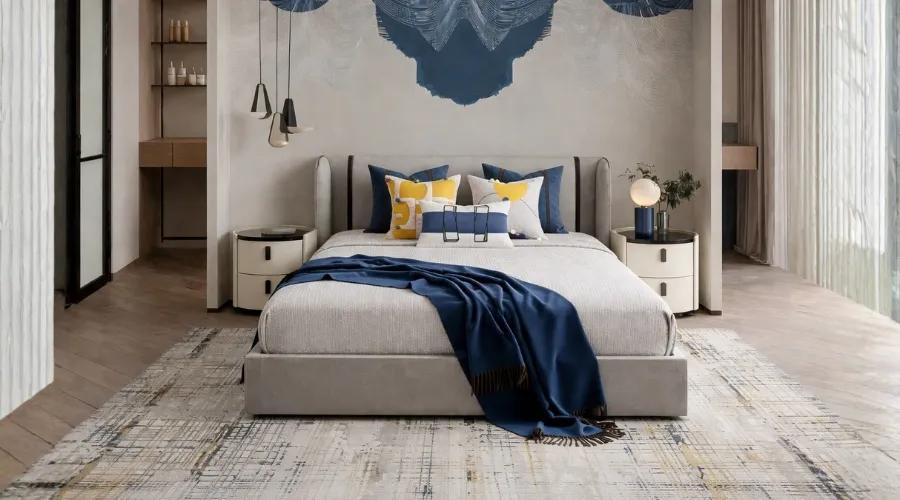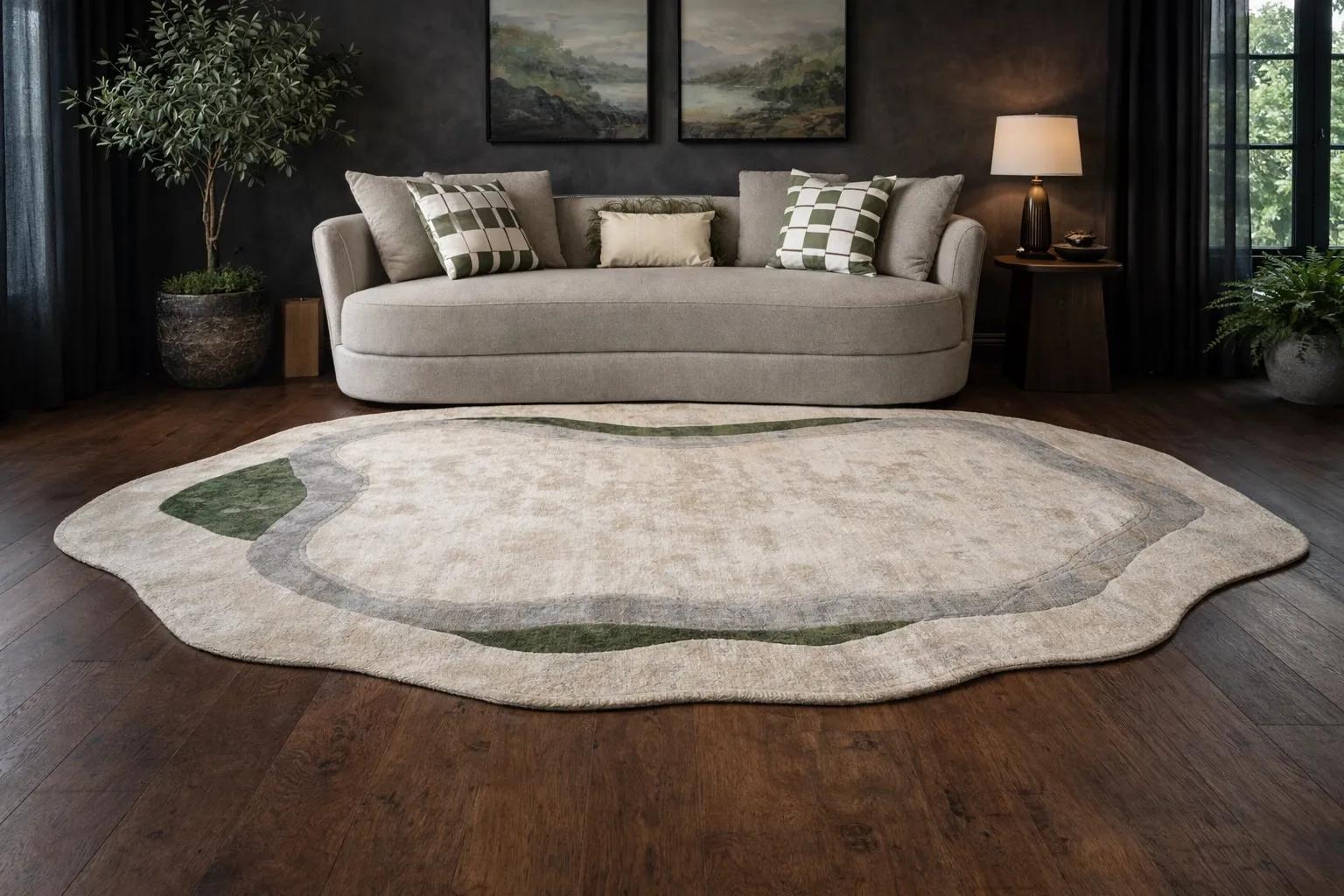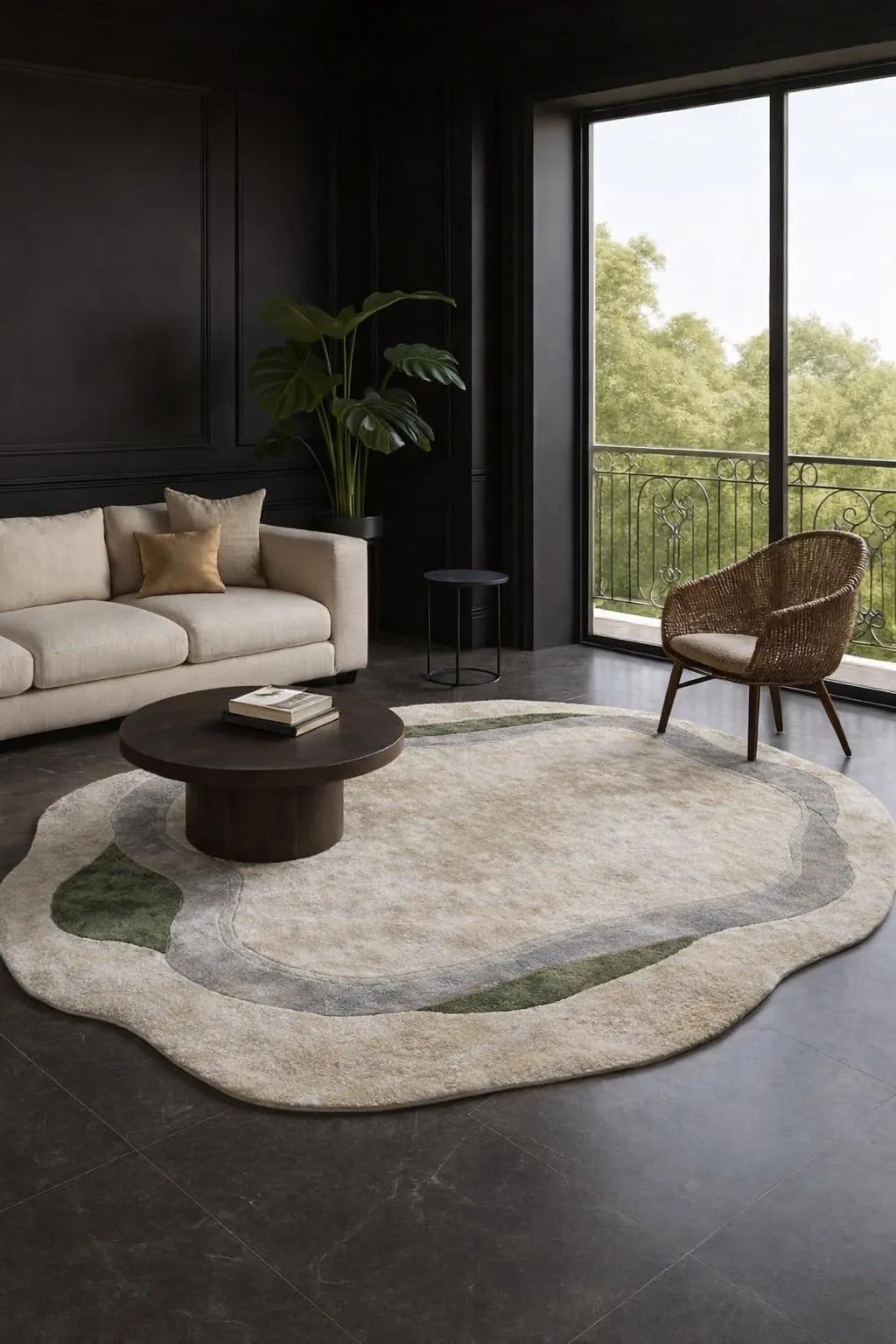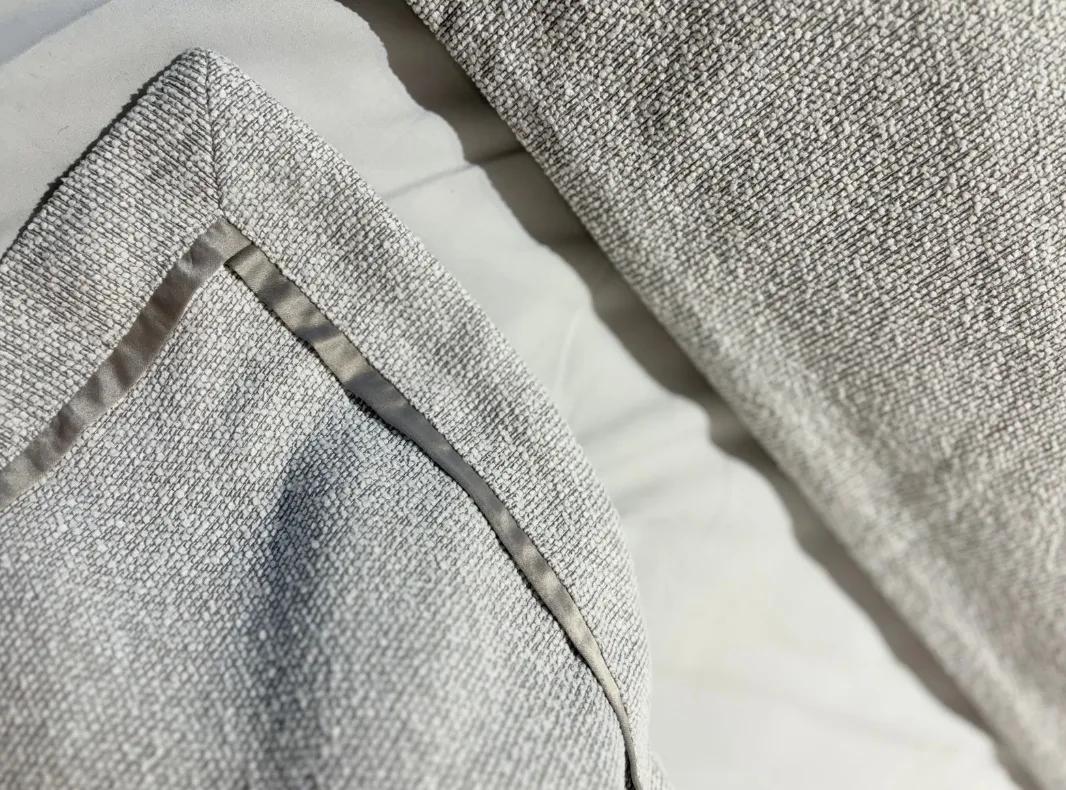
Run your hand over a bouclé cushion and you understand immediately why designers keep returning to it. Bouclé fabric — the name comes from the French boucler, to curl — is woven from yarn that has been deliberately looped and knotted, so the surface rises into hundreds of tiny, irregular curls. The result is a fabric that looks soft from across the room and feels even softer up close. If you have admired a pale, nubby armchair in a Scandinavian interior photograph, you have almost certainly been admiring bouclé.
Where bouclé comes from
Bouclé began as a tailoring fabric. In the 1950s, the house of Chanel made looped wool tweeds famous in jackets and suits, and mid-century furniture designers soon borrowed the texture for upholstery. The most photographed example is probably Eero Saarinen's Womb Chair, which has been covered in bouclé since 1948.
The fabric's revival over the past decade owes a great deal to the warm minimalism that now dominates interiors from Copenhagen to Milan. Smooth surfaces — polished stone, flat-weave linen, lacquered wood — need something tactile to balance them, and bouclé supplies that softness without pattern or shine. It adds visual quiet rather than noise, which is exactly what restrained rooms ask for.
How the loops are made
Bouclé is defined by its yarn rather than its fibre. A bouclé yarn is spun from at least two strands: a core strand held at steady tension, and an effect strand fed in faster so that it buckles into loops along the way. A third binder strand often locks the loops in place. When this curled yarn is woven or knitted, the loops sit proud of the surface and create the fabric's characteristic pebbled texture.
The fibre itself can vary. Traditional bouclé is wool or mohair; contemporary versions are often cotton, polyester or blends, which makes them more practical for cushion covers that need regular washing. The loop size varies too — fine, dense loops read as a subtle texture, while larger loops give that distinctly sheep-like, teddy look.
Why it suits Indian homes
Bouclé's reputation as a cold-climate fabric is only half-deserved. A few practical points matter more in an Indian flat than the fabric's Nordic associations.
Texture without weight. A cotton-blend bouclé cushion cover gives a room the layered, expensive look without the warmth of a wool throw — useful when the ceiling fan runs eight months of the year.
Forgiving in real life. The irregular surface hides minor crushing, light marks and the general wear of a sofa that the whole family actually uses.
A natural partner for dark wood. Against sheesham or teak furniture, an ivory or oat bouclé cushion creates the tonal contrast that makes both look deliberate.
The one genuine caution is monsoon humidity. Like any textured fabric, bouclé holds moisture longer than a flat weave, so cushions kept near an open window in July benefit from an occasional airing in sunlight.
What to look for when buying
Not all bouclé is equal, and the differences are easy to check by hand.
Loop density. Press the fabric. Good bouclé feels springy and recovers quickly; sparse loops over a thin base will flatten within months.
Binder strength. Tug gently at a loop. It should resist. If it pulls free easily, the yarn was poorly bound and the cover will snag on the first zip or pet claw it meets.
Backing fabric. A woven backing keeps the cover's shape; a flimsy knit backing sags around the insert.
Zip and seams. A concealed zip and back-stitched seams suggest the maker expected the cover to be washed and reused for years.
At SOISU, the bouclé cushion covers are curated from production partners whose cotton-rich bouclé yarns are chosen to stand up to Indian washing habits and Indian summers, and every piece is checked at our Prabhadevi studio in Mumbai. Each cover is photographed at quality check before dispatch, which is a sensible standard for any textured fabric where loop consistency is the whole point.
Caring for bouclé
Bouclé asks for slightly gentler treatment than a flat cotton cover, but nothing onerous. Wash covers cold on a gentle cycle, ideally inside a mesh bag, and skip the dryer — line-dry in shade so the loops keep their spring. Hard water can leave fibres feeling stiff over time; a small dose of liquid fabric conditioner once in a while helps. Never iron the looped face directly. If a loop does pull, do not cut it flush; thread it back through to the reverse with a blunt needle.
The short version
Bouclé is looped yarn woven into a fabric that adds softness, depth and quiet luxury to a room. For an Indian home, choose a cotton-blend bouclé with dense, well-bound loops and a proper woven backing; pair pale neutrals against dark furniture; wash gently and dry in shade. Start with two cushion covers on an existing sofa — it is the least expensive way to test whether the world's cosiest texture belongs in your living room.