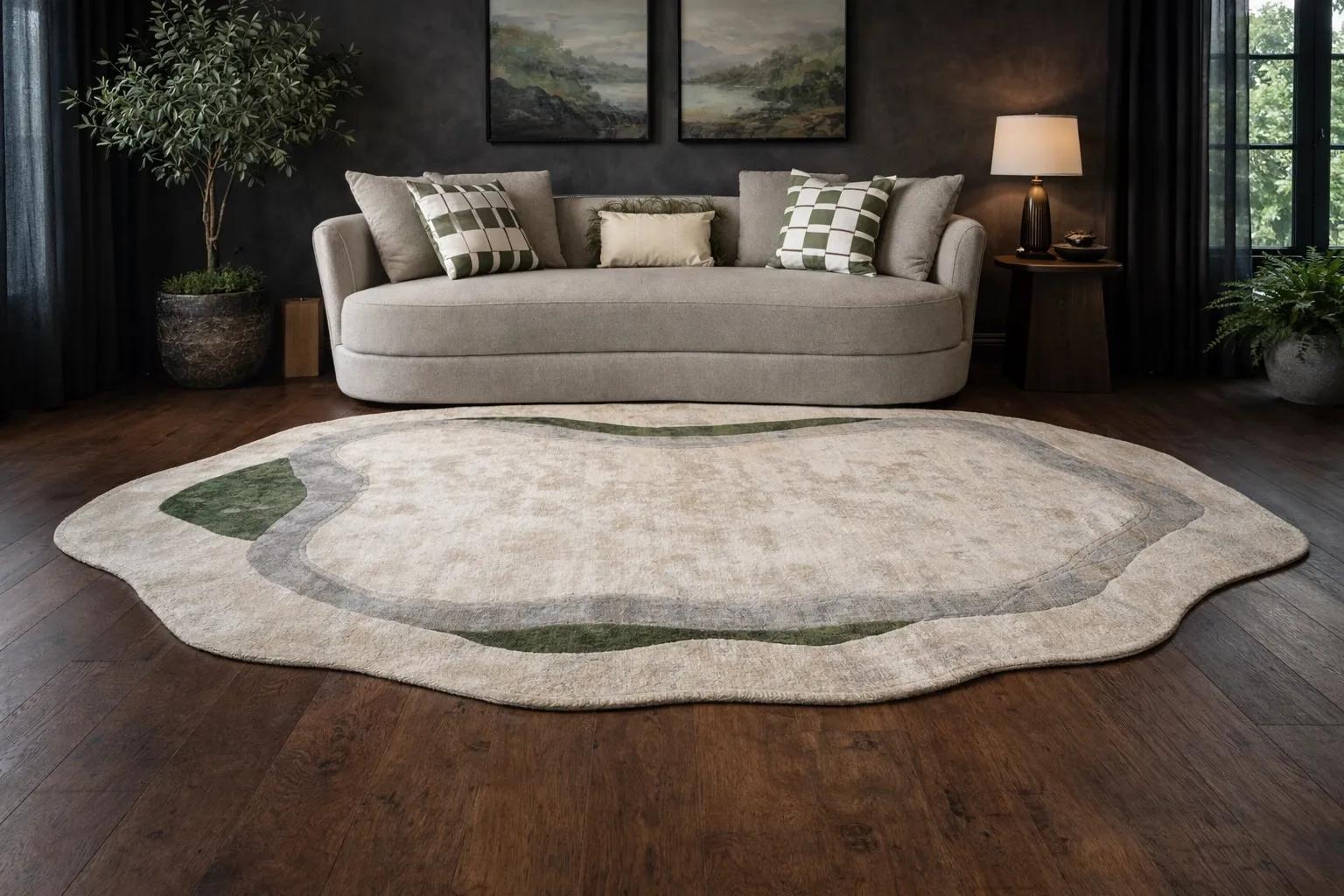
Knowing how to arrange cushions on a sofa is one of those small competencies that changes a room out of all proportion to its cost. The same three-seater, the same five cushions, and one arrangement looks composed while another looks like the aftermath of an afternoon nap. The good news is that cushion arrangement is not taste so much as technique — a handful of rules about size, number and order that work as reliably in a Prabhadevi 2BHK as anywhere else. Here is the full method.
Start with size: the four that matter
Cushion covers in India come overwhelmingly in four sizes, and each has a job:
Size · Role 24 × 24 in · The anchor. Sits at the back corner, gives the arrangement height and structure 20 × 20 in · The workhorse. The default corner cushion on most Indian 3-seaters 18 × 18 in · The middle layer. Sits in front of or beside the 20s 16 × 16 in · The accent. Smallest, sits at the front or centre; also the lumbar alternative
The single most common mistake in Indian homes is buying everything in 16-inch — usually because the sofa came with 16-inch fillers. A row of small cushions on a large sofa looks mean. Size up: on a standard 3-seater, 20-inch corners are correct, and 24-inch works if the sofa has a high back. Buy fillers 1–2 inches larger than the cover (an 18-inch cover wants a 20-inch filler) so cushions sit plump, not deflated at the corners.
How many: odd numbers, with one exception
3-seater sofa: five cushions is the classic; three if you prefer spare.
2-seater: three cushions.
Single armchair: one, always one.
L-shaped sofa: treat each arm as its own run — typically five on the long side, two or three on the chaise, seven to eight in total.
The exception: strictly symmetrical, formal rooms can take an even number — two matched pairs of four on a 3-seater reads as deliberate. For everything else, odd numbers look composed without looking arranged.
The order: big at the back, out to in
Work from the corners inward and from large to small:
Place the largest cushions (20 or 24 inch) at the two back corners, square on.
Place the next size down (18 inch) inside or in front of them.
Finish with one accent — a 16-inch square or a rectangular lumbar — at the centre.
So a five-cushion 3-seater reads, left to right: 20, 18, 16 (centre), 18, 20. The silhouette steps down from the arms to the middle, like a range of hills, and the eye settles.
Colour and pattern: the 3-2-1 method
A five-cushion arrangement holds together when it follows a simple ratio:
3 cushions in your base — a textured neutral that relates to the sofa. Texture matters here; flat plain cotton in a plain colour can look like packaging.
2 cushions in your accent colour — the sage, rust, indigo or ochre that gives the room its note.
1 cushion in a pattern or a second texture — a stripe, a small block print, a velvet — that contains both the base and accent colours.
Three colours across the whole arrangement, no more. If your sofa is dark — and most Indian sofas in sheesham-framed or deep-toned upholstery are — keep the base cushions light, so the arrangement lifts the sofa rather than sinking into it. Mixing textures within one palette (linen beside velvet beside soft cotton) is what separates a considered sofa from a matched set; it is the reason SOISU curates the same colour story across linen, velvet and woven covers, so the mix is built in rather than hunted down.
The karate chop, and other finishing questions
The chop — that dent in the top of a cushion — works only on feather or soft-fibre fillers; foam inserts spring back and merely look assaulted. If your fillers are firm, leave the tops alone and plump from the sides instead.
A few remaining judgement calls:
Zips face down and inward, always.
Rotate covers seasonally. Heavier velvets and wools from October; washed linens and cottons through summer. Two sets of covers cost far less than two sofas' worth of mood.
Daily reset takes thirty seconds. Corners to corners, plump, step down in size, done. An arrangement that needs longer than that is over-engineered.
A sofa should look like it was arranged by someone with standards and sat on by someone with a life.
The takeaway
The whole method in five lines: size up — 20-inch corners on a 3-seater, never a row of 16s; odd numbers — five on a 3-seater, three on a 2-seater; order from large at the back corners to small at the centre; colour by the 3-2-1 ratio — three base, two accent, one pattern — within a three-colour limit; and buy fillers a size larger than the covers. Follow those and the sofa composes itself, every single morning.