Concepts · 6 min read · 03 Oct 2026
How to Style a Diwan or Daybed with Bolsters and Cushions
Style a diwan with two bolsters at the ends and three to five cushions along the back, on a fitted or neatly tucked cover. Keep the base plain, put pattern in the cushions, and dress it up for festivals by adding, not replacing.
By the SOISU studio
To style a diwan, start with a plain, well-fitted cover, place a bolster at each end, and line three to five cushions along the back or wall side. Keep the base calm and let the cushions carry colour and pattern. For festivals, add a few extra cushions and a richer throw rather than changing everything.
Diwan, daybed, takht: what are we styling?
The words overlap, and the styling is similar for all of them.
- Diwan — in most Indian homes, a low, long seat without a back, often placed against a wall. Sometimes it has storage underneath.
- Takht — a low wooden platform, traditionally carved or plain, used for sitting cross-legged.
- Daybed — the contemporary version, usually with a back and one or two arms, somewhere between a sofa and a single bed.
All three are long, fairly deep and low. That shape needs two things from textiles: support for the back (because there often is none) and something to stop it looking like a bench.
Traditional versus contemporary styling
There are two broad directions, and both are valid.
Traditional. Think of a gaddi-style setup: a thin mattress or cover, long round bolsters (called takiya or gol takiya), and a row of square cushions against the wall. Colours are often rich — red, maroon, mustard, deep green — with block prints, ikat or woven borders. People sit cross-legged or recline against the bolsters.
Contemporary. The same bones, simplified. A plain cover in a neutral or a single strong colour, bolsters in a coordinating plain or subtle stripe, and fewer cushions in a tight palette. Pattern is limited to one or two pieces. This suits Japandi, quiet-luxury and Indo-modern rooms. Our guide to Japandi style in Indian homes shows how restraint works in this kind of space.
A good middle path for most homes: contemporary base and bolsters, with one or two traditional prints in the cushions.
How many bolsters and cushions?
Numbers depend on length. These are starting points, not rules.
- Up to about 5 ft — Bolsters: 2 — Square cushions (45 × 45 cm): 2–3 — Lumbar (30 × 45 cm): 0–1
- About 6 ft (standard single-bed length) — Bolsters: 2 — Square cushions (45 × 45 cm): 3–4 — Lumbar (30 × 45 cm): 1
- 7 ft and longer — Bolsters: 2 — Square cushions (45 × 45 cm): 4–5 — Lumbar (30 × 45 cm): 1–2
A few guidelines behind the table:
- Bolsters go at the ends. They act as armrests and frame the seat. On a diwan against a wall, you can also lay one bolster along the wall as a backrest.
- Squares go along the back. On a backless diwan against a wall, stand them upright against the wall. On a daybed with a back, lean them against it.
- The lumbar goes in front. A single lumbar in the middle or off-centre adds depth and gives the arrangement a finish.
- Leave sitting room. If the cushions take more than about a third of the seat depth, the diwan becomes a display rather than a seat.
For more on how many cushions suit different seats, see our cushion arrangement guide. You can find both square and lumbar sizes in cushion covers; covers are sold without filler, and a microfibre insert can be added.
Fabric and colour pairing
The trick is to build layers that relate to each other without matching.
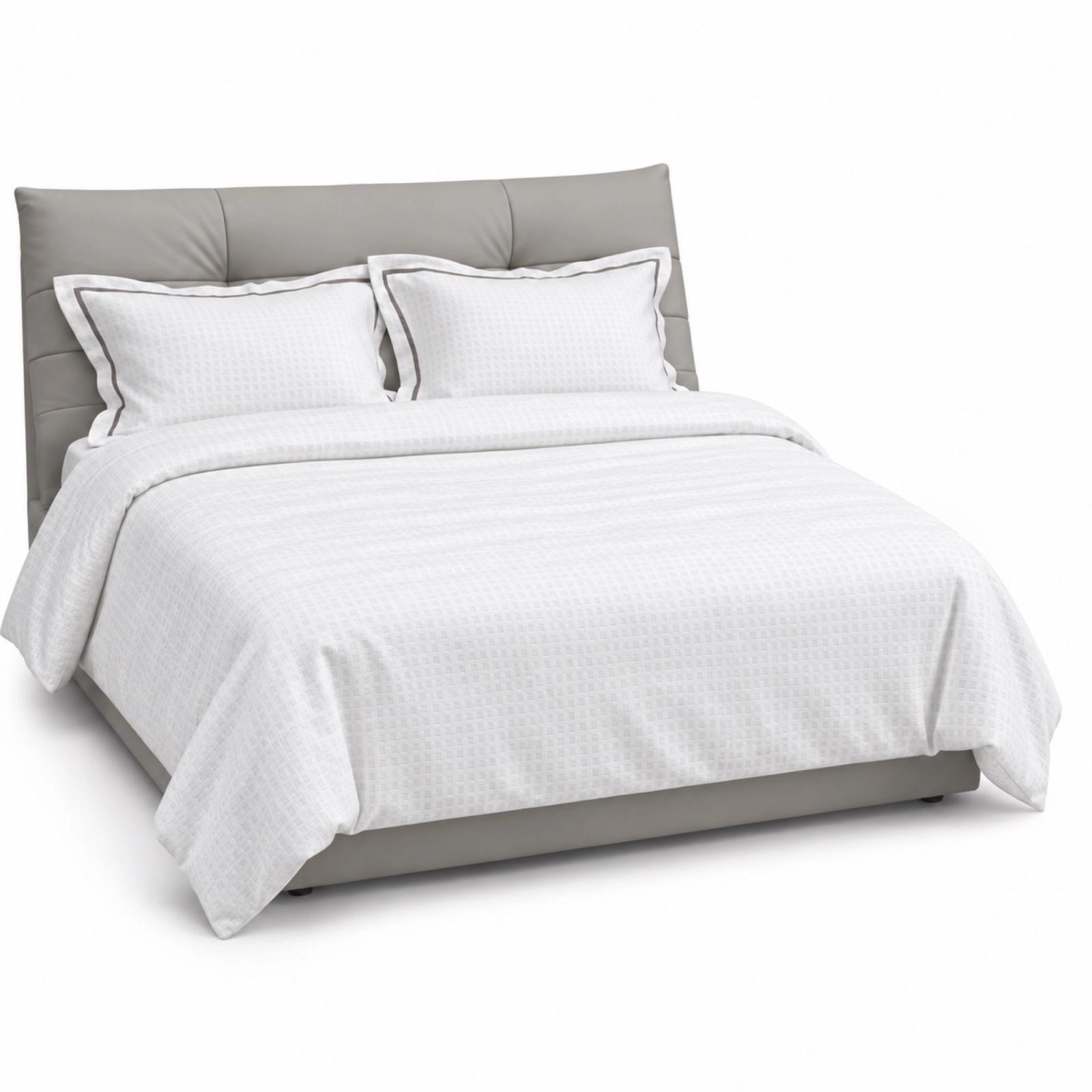
- Base cover. Plain or very quiet texture. Neutrals (ivory, oatmeal, sand, grey-beige) are the most flexible. A deep indigo or rust base also works if the rest of the room is calm.
- Bolsters. Either match the base, or go one step darker. A stripe or narrow border on bolsters looks especially good because it follows their round shape.
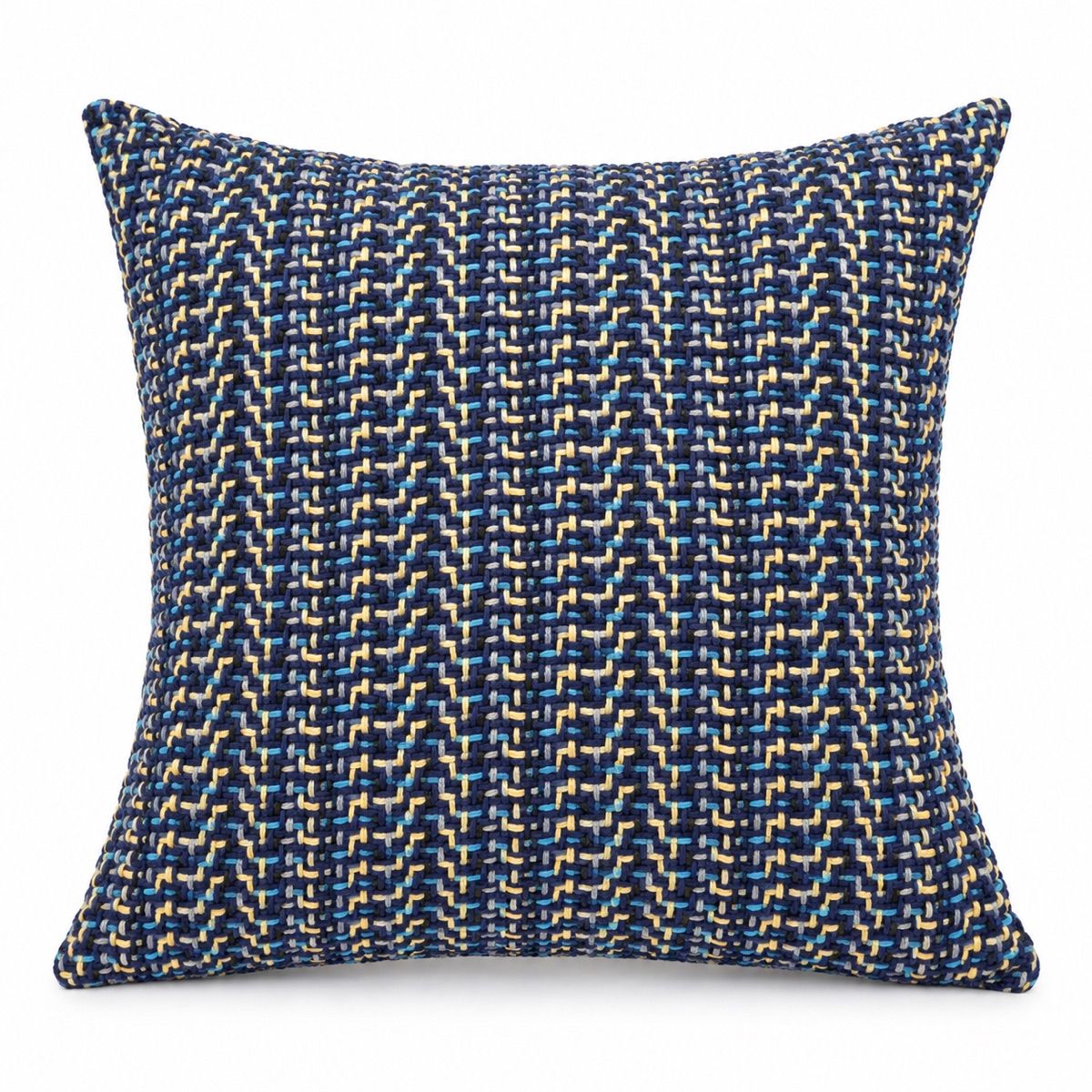
- Square cushions. This is where pattern and colour live. Use two or three colours from the room's palette, with one print and the rest plain or textured.
- Lumbar. The accent. Your strongest colour or most detailed pattern, used once.
- Throw. Folded at one end, or draped along the back edge. Pick up a colour from the cushions.
On texture, contrast helps: a smooth base, a woven bolster, a slubby or embroidered cushion. See how to layer textures in a room for more combinations, and cushion colour pairing for colour-by-colour advice.
Placement in the room
Where the diwan sits changes how you style it.
- Against a wall in the living room. The most common setup. Treat it like a second sofa: bolsters at the ends, cushions against the wall, a small rug in front if the floor is marble or tile.
- In a window bay. Keep cushions lower so they do not block light. Two squares and a lumbar are often enough.
- In a study or guest room. Style it to sleep on: a fitted cover, bolsters that can be moved aside, and a throw that doubles as a blanket.
- Floating in an open room. If the diwan sits away from a wall, style both long sides lightly, or treat one side as the "back" with a row of cushions and keep the other clear.
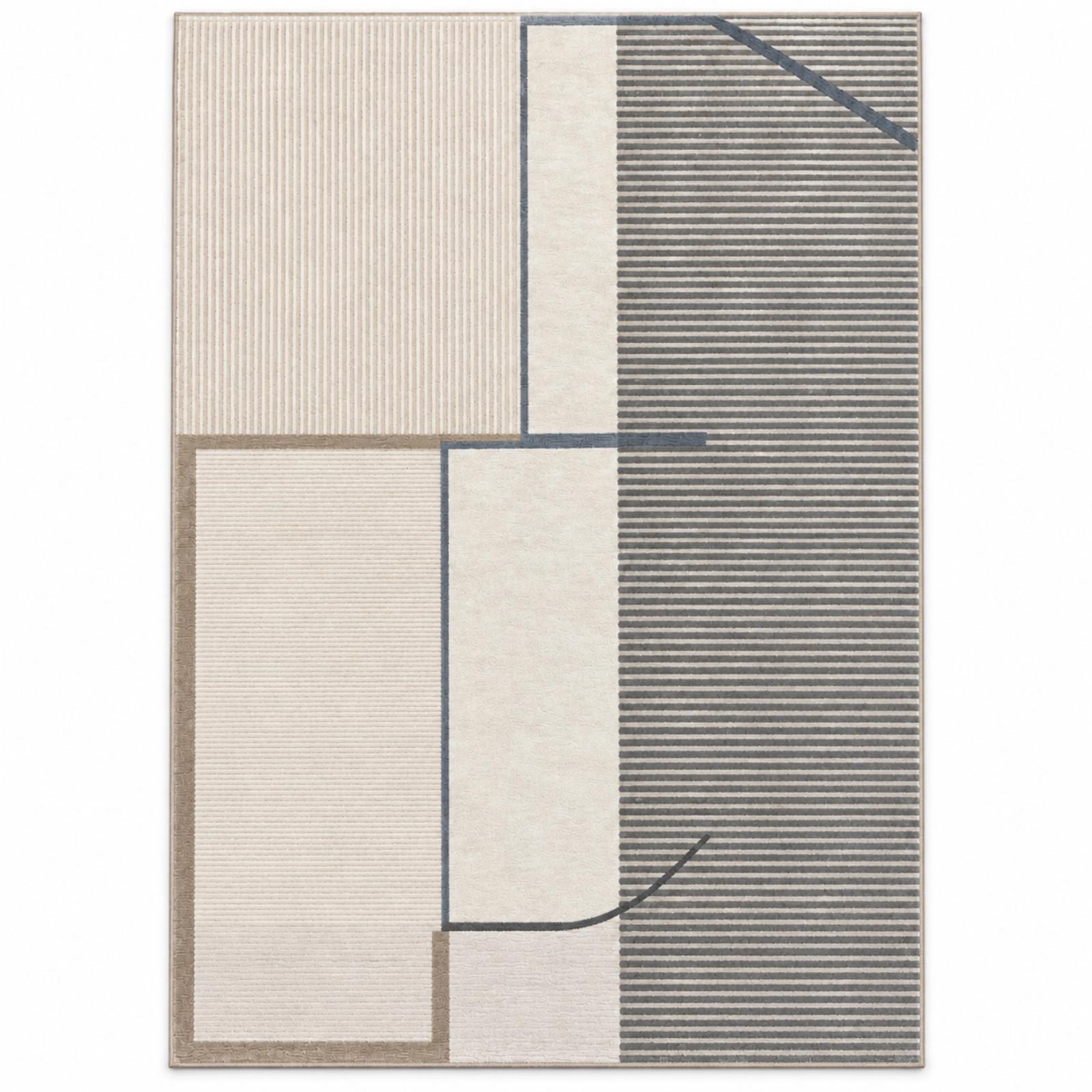
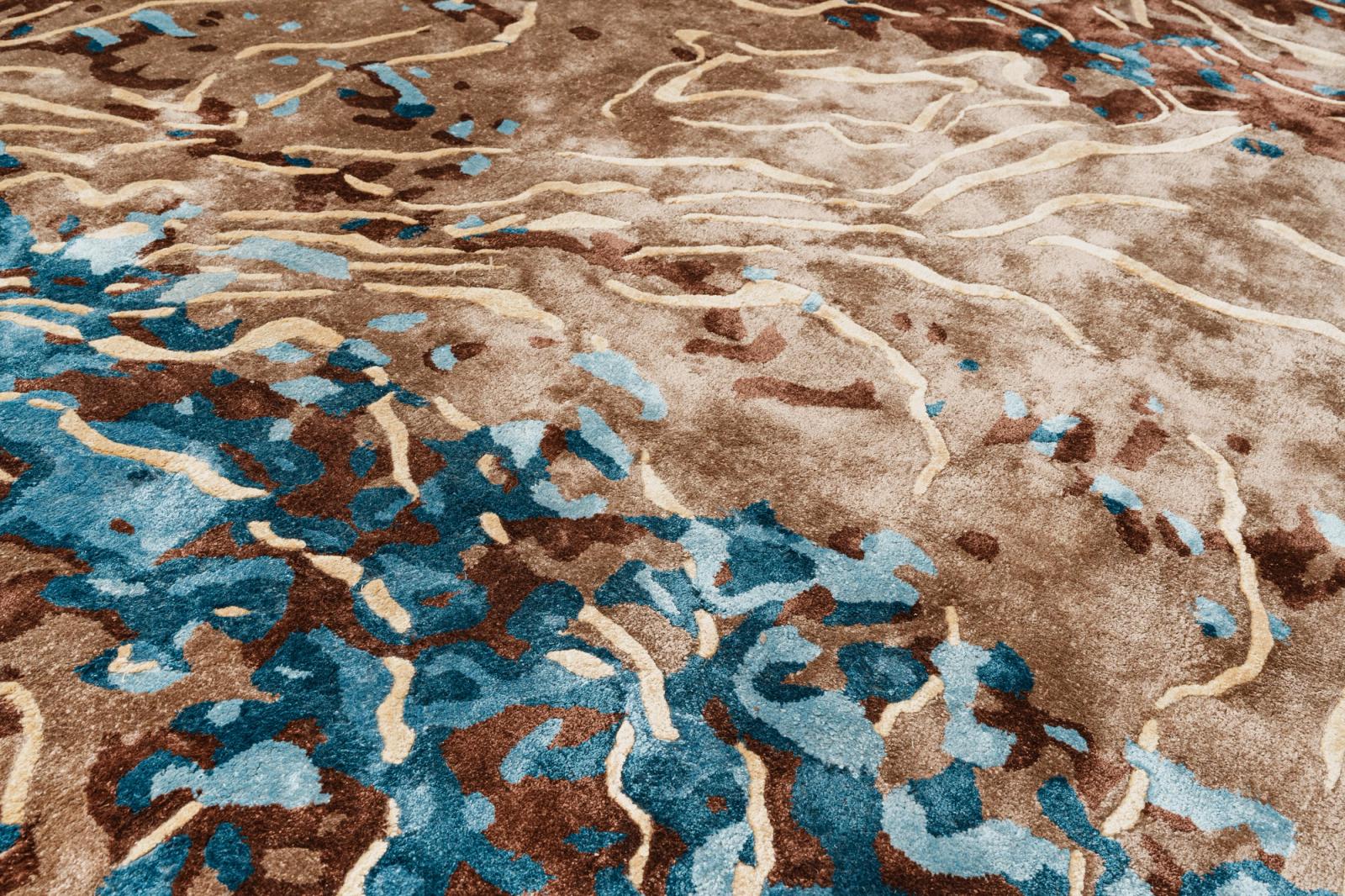
A rug under or in front of the diwan anchors it, particularly on a large marble floor where a low piece can look lost. Our rug size guide covers proportions; rugs run from roughly 4 × 6 ft upwards, which suits most diwan setups.
Festive versus everyday
A diwan is often the heart of festive seating — Diwali, Navratri, family gatherings — so it helps to have two looks that share a base.
Everyday
- Neutral cover, two bolsters, three cushions, one lumbar.
- A light throw at one end.
- Mostly plain textiles, one print.
Festive
- Keep the same cover and bolsters.
- Swap two plain cushions for richer ones: silk-look, zari-bordered, embroidered or in jewel tones.
- Add one or two extra cushions for guests who will sit cross-legged.
- Replace the light throw with a heavier or more decorative one.
- Add a runner or low tray nearby for diyas, sweets or flowers, kept well away from fabric.
Storing a small "festive set" of cushion covers means the change takes ten minutes. Covers take up very little space when folded. When the festival ends, wash them, let them dry fully, and store them flat in a dry cupboard.
Common mistakes
- Too many cushions. It stops being a seat. Stick to the counts above.
- Everything the same colour. The diwan flattens into a block. Vary tone at least.
- A loose, slipping cover. Tuck it firmly or use a fitted cover; a crumpled base undoes everything above it.
- No back support on a backless diwan. Without a wall or bolster behind, nobody will sit on it for long.
- Ignoring scale. Very large cushions on a narrow diwan eat the seat.
For complete looks with coordinated cushions, throws and rugs, browse the Concept Shop.
The short version
- Plain, well-fitted base; two bolsters at the ends; three to five cushions along the back; one lumbar in front.
- Put colour and pattern in the cushions, not the base.
- Contemporary base with one or two traditional prints suits most Indian homes.
- Anchor the diwan with a rug on marble or tile floors.
- For festivals, swap and add cushions and a richer throw; keep the base and bolsters.